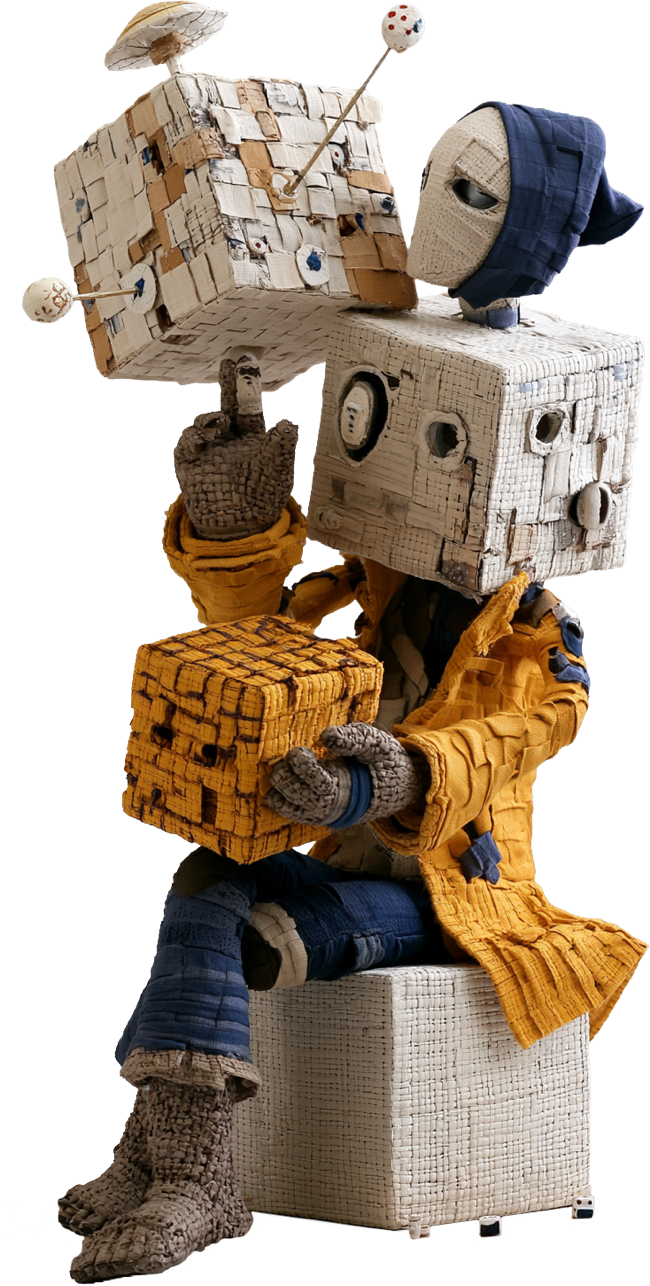


My wife started calling them my crew somewhere in the first year.
She’d ask what I was up to and I’d say something like “arguing with Manus about card costs,” or “waiting on MidJourney,” and eventually she stopped asking about the tools one at a time and just asked how the crew was doing. It stuck. It’s the most accurate word anybody has used for it, including me.
Redacted: Disclosure is Eminent went on sale on the 25th of August at redacted.cx. It’s a satirical UFO-disclosure trading card game. It took two years, and it is the first complete product I have ever finished entirely on my own.
I did all of it myself, and I did almost none of it alone. Those two sentences don’t contradict each other, and working out why is most of what I learned.
A joke my brother doesn’t remember making
Summer 2024. Drinks with my brother, the conversation drifts toward UFO disclosure the way it periodically does, and he says — apparently sincerely — “Dr. Steven Greer needs a trading card.”
We laughed. He forgot about it by morning. I’ve been at it ever since.
I told the long version of that story in an earlier post, including the four unexplained things I’ve seen with my own eyes. That one is about the why. This one is about the work.
Everything after that, roughly in order
Fall 2024 into that winter I ran the whole idea at Manus and Grok as a research brief. Was this legally survivable, was there a real game inside the joke, what does a turn economy even look like. I know how to design cards. I have never in my life known how to balance a cost curve. Ten years ago that gap ends the project by dinnertime; instead I had the bones of a rule set inside a couple of weeks.
Winter into spring 2025 was card art, and it was done almost entirely from bed on a laptop, because our newborn was still sharing a room with her mother and me. MidJourney and ChatGPT, roughly fifteen rejected images for every one I kept, one to two hours per finished card. Fifty-eight illustrations. I did not have SREF codes yet — that’s a whole other project I built later, and it would have cut months off this one.
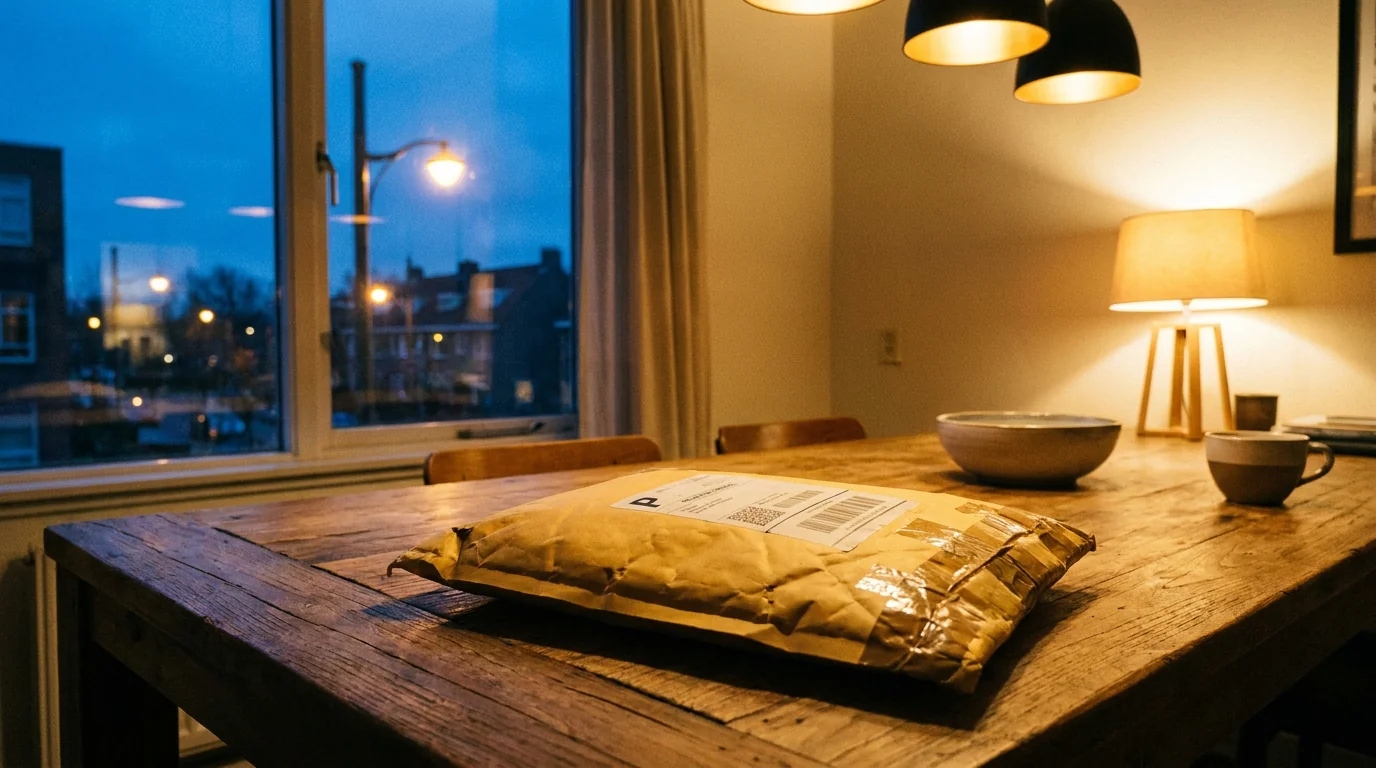
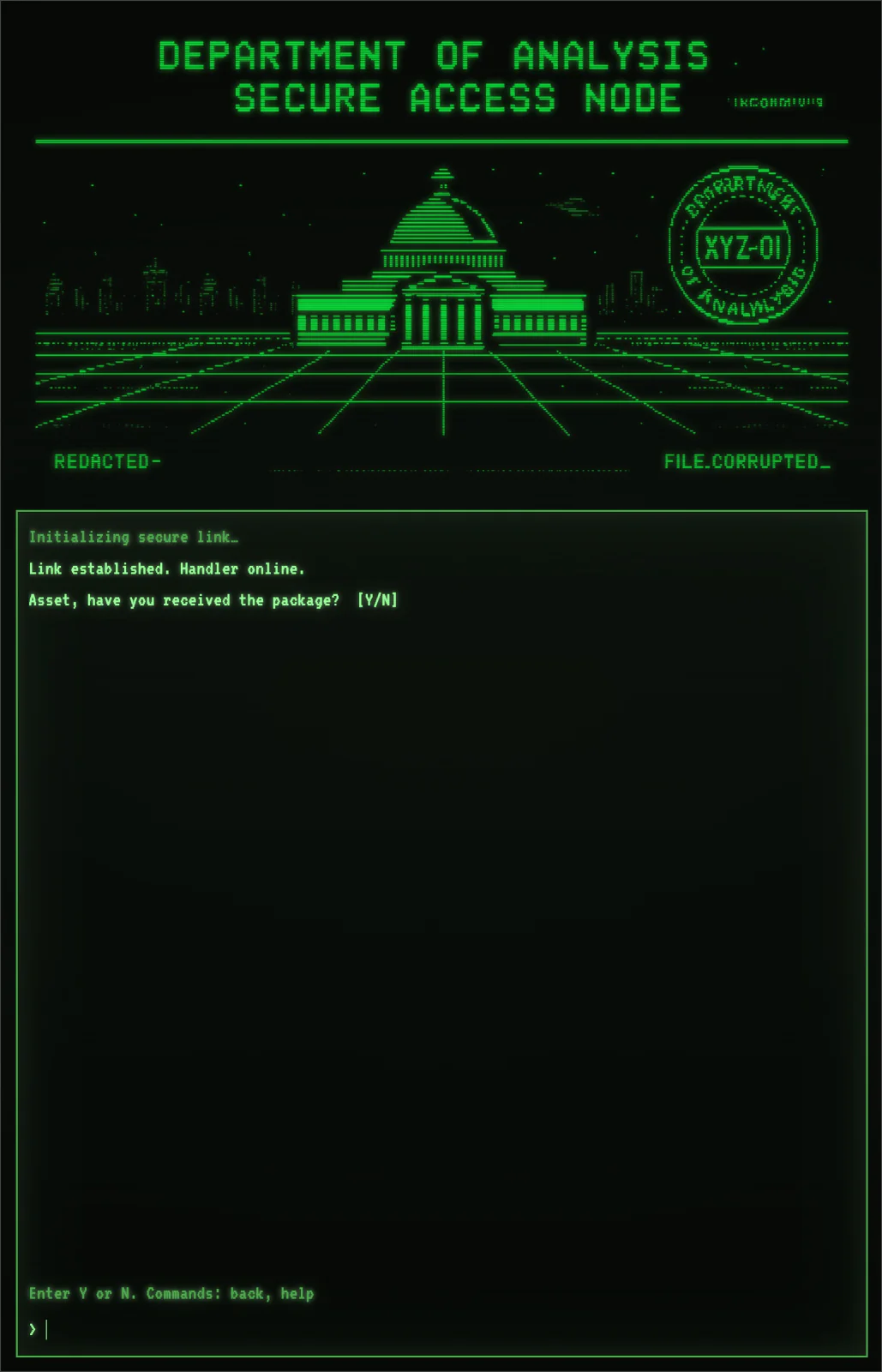
Spring into summer 2025 I laid the cards out in Affinity, mostly because I was having an Adobe-is-terrible moment and wanted an excuse. Data merge produced all fifty-plus print files at once. I found MakePlayingCards, ordered ten decks, and mailed them to friends in plain padded envelopes my wife had brought home from a post office run, because the project crossed her mind while she was standing in line. It landed near my birthday and I have always quietly filed it as one. That was the moment I realized somebody other than me had started treating this as a real thing. Each envelope had a slip pointing to a green-on-black CRT feedback terminal that Claude Code built in an afternoon, the first time I ever used it. That afternoon rearranged how I work. I’m still not entirely over it.
Fall 2025 through spring 2026 the project sat. I’d shipped the betas and I needed people to actually play them, so I went and built SMC instead — a bookmark manager for MidJourney style codes that has been in free public beta for nearly a year and has, as far as I can tell, exactly one regular user. If you have thoughts on how to reach the other ones, I’m listening.
Early summer 2026 Fable 5 landed and I fed it everything. It rewrote the rules and mechanics from the ground up, and then — unprompted — wrote a Python harness so it could drive my own machine and play the game against itself in a rebalancing loop. Twelve hundred games later the numbers were right. It finished the job roughly four minutes before the Feds pulled the plug on it, which I’m told is a coincidence.
Mid-summer 2026 Fable 5 came back and I tried to turn the new rules into an online game. It worked. It was not good. I nearly quit over it. Then I spent a while convinced the answer was Rive, and I’ll say this plainly: I love Rive, Rive is not easy, and I think I need to live inside it for about a year before it’s second nature. That’s a real answer, not a dodge.
Two weeks ago I watched a video about where organic marketing is heading, which put Gary Vaynerchuk back on my radar, and I thought: I wish I had a product ready to promote. The next morning, in the shower, the actual thought arrived. I do have a product. What if I drop the online game entirely and get serious about the physical one?
Everything since has been that. New print files, this time in InDesign, because my muscle memory belongs to Adobe and has for two decades. A new site designed in Sketch and built in Cursor with Grok 4.6 at the wheel — the closest I have come to design accuracy and idea-to-reality speed since the original Fable 5. A shorts template in DaVinci Resolve, period b-roll generated in Higgsfield, my first card-introduction video, Stripe wired up, and doors open.
What actually got learned
This was the first thing I ever built with AI in the room. Not a tool I bolted onto an existing process — the whole thing started as a Manus research brief. Everything I know about working this way, I learned here, in public, badly at first.
It never stopped being a lean MVP. Research, build, ship ten decks, get feedback, park it, rebuild, pivot, ship again. Two years of that. Nothing about the loop was new to me — I’ve run it for other people’s products for most of my career. What was new was running it at a cadence of one person and about ninety minutes a night.
Every skill I’ve built showed up at once. Product planning, UX, lean method, art direction, design, front-end, brand, the strategic calls, the aggressive ones, and — newer for me — copywriting and video editing. Thirty years of accumulated practice all pointed at one small object. And underneath all of it I was learning a genuinely new craft: how to direct models, when to trust them, when to throw the output away, and which fifteen of sixteen images go in the bin.
It’s the first complete product I’ve finished alone. I’ve spent my career inside teams — agencies, in-house, client work, always with people beside me who were better than me at something. Redacted is the first thing with my name on every layer of it. The asterisk is enormous and I’m not going to pretend otherwise: the crew was fifteen strong and worked around the clock.
And it turns out that’s worth something specific. I got curious about how much, so I ran the numbers properly — what a studio would have had to commission to produce everything in that box. The answer was uncomfortable enough that I wrote it up as its own case study, table and caveats included. Short version: about a hundred and twenty times what I actually spent.
Where it is now
Doors are open at redacted.cx. Starter decks and expansion packs, pre-order, shipping the first of December. There’s a drip of card-introduction videos going up at @Redacted-Game between now and then, which is me learning organic marketing in the least private way possible.
The game is good. I’ve watched people who don’t care about UFOs at all get competitive about it by round three, which is the only playtest result that ever mattered to me.
One last thing
The thing my wife understood before I did is that a crew isn’t a tool. You don’t get better at a crew by reading the manual. You get better at it the way you get better at running any group of talented, uneven, occasionally brilliant collaborators — by knowing what to ask for, what to reject, and when to stop asking and go do it yourself.
That’s the skill. It took a card game about aliens to teach it to me.